The “Self-Sabotage Insurance Policy”

Many people don’t fear failure as much as they fear discovering what happens when they truly try. The Self-Sabotage Insurance Policy explains why.
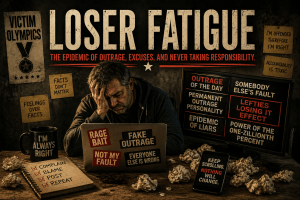 New here? Start with the Loser Fatigue Case Files index – a running list of every politician, media hack, and grifter who’s earned a spot in the Hall of Shame.
Loser Fatigue — Weekly behavior scorecards & receipts. We target moves—volume over evidence, cherry-picking, goalpost-moving, clip fraud—not identities.
Editorial Standards
Bullshit Meter: Trust-But-Verify
Many people don’t fear failure as much as they fear discovering what happens when they truly try. The Self-Sabotage Insurance Policy explains why.

Pain is real. The danger comes when being wronged becomes a permanent identity instead of a chapter in your story.

Information has never been easier to find. The Nobody Told Me Defense examines why some people still treat ignorance as a substitute for responsibility.

Excuses are often true. The problem is they rarely solve anything. The Excuse Inventory Habit examines why explanations can become obstacles.

Not every inconvenience is a conspiracy. The Main Character Problem examines how self-centered thinking can fuel victimhood, resentment, and excuse-making.

Support and safety matter. But when discomfort becomes unacceptable, resilience often disappears with it.

Healing matters. But when recovery becomes a permanent identity, growth can quietly turn into avoidance.

When approval becomes the goal, accomplishment often becomes secondary. The Validation Economy Problem examines the growing need for recognition in everyday life.

A comfortable life sounds appealing. The Soft Life Fantasy examines what happens when comfort becomes the goal instead of the reward.

Boundaries are healthy. Avoidance isn’t. The Protect Your Peace Abuse examines when self-care language becomes a shield against growth and responsibility.